
Method: This guide uses the site’s historical local material, current primary-source checking where a changing fact matters, and editorial judgment. Prices, schedules, access and transport should always be reconfirmed for your date.
Why sequence matters
Mosaics are read through architecture as well as imagery. Light level, curve, distance and movement change what you notice. Visiting fewer spaces attentively can teach more than moving quickly through every included site.
A concrete observation exercise
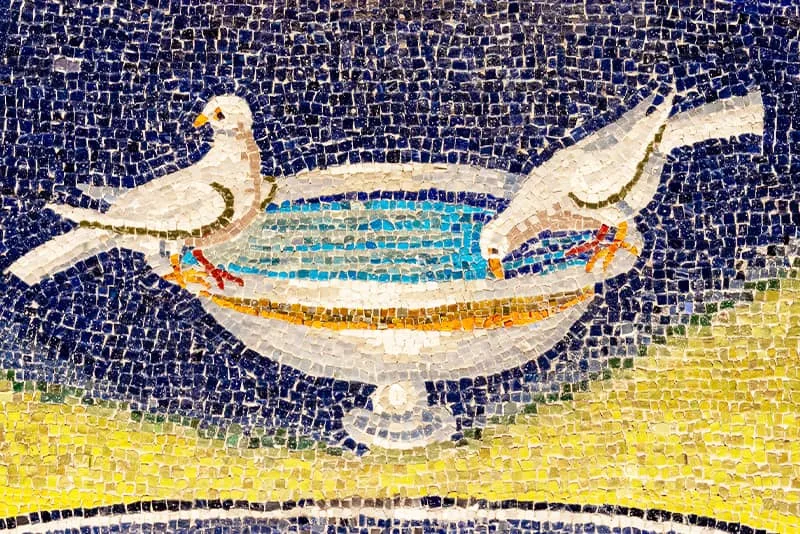
Choose one figure or border and look three times: first for the overall composition, then for colour and material shifts, then from another position. Notice how tesserae catch light rather than behaving like flat paint. Record the question the image leaves you with instead of only photographing it.
Evidence and interpretation
Dates, patrons and iconographic readings should come from monument authorities, museums or qualified scholarship. A guide should distinguish established identification from interpretation. We avoid turning complex religious and political programmes into a single “secret meaning.”
Editorial judgment
A workshop and a monument visit complement each other: making clarifies material decisions, while the historic spaces show scale and purpose. If time is short, prioritise viewing; if you stay longer, practical making can deepen the second look.
Sources, limits and corrections
For time-sensitive decisions, use the relevant operator, venue, monument authority or transport provider as the final source. We intentionally omit unstable precision when it cannot be verified. If you find an error, send the page URL and a primary source to server@artandfoodtours.com; an editor reviews the evidence before changing the page.
Your next useful step
Compare the relevant Bologna experiences or Ravenna experiences, then prepare a booking enquiry with the practical questions this guide surfaced.